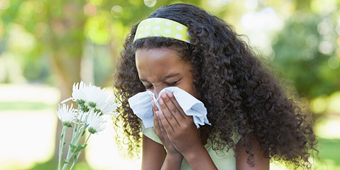
Answers to Common Asthma and Allergy Questions
Premier HealthNet physicians answer frequently asked questions on asthma and allergies.
What is asthma and what are its symptoms?
Asthma is a long-term lung problem where tiny airways constrict (get even smaller), fill with mucus and swell. Less air gets through the lungs and you get less oxygen. No one knows what causes asthma.
Asthma symptoms include
- coughing (especially at night)
- wheezing
- chest tightness
- shortness of breath
- low energy
- feeling lightheaded
Even if you have mild symptoms, see your physician. Asthma can permanently damage your lungs if it’s not treated – even if you don’t have trouble breathing.
Call 911 if you have these symptoms of a serious asthma attack
- Severe trouble breathing
- Being so out of breath you can’t finish a sentence or walk across the room
- Lips or fingers turning blue
- Feeling like you’re about to pass out
Dr. Alappatt discusses asthma and its symptoms. Click play to watch the video or read the transcript.
Learn more:
Back to top
What are seasonal allergies and its symptoms
Seasonal allergies are your body’s response to triggers (allergens) like pollen and mold. If you have allergies, your body has a chemical response to these allergens, releasing histamines. The histamines cause your symptoms.
Allergy symptoms include
- Runny nose
- Congestion
- Sneezing
- Rashes or hives
- Itchy, watery eyes
- Itchy throat and/or ears
Seasonal allergies are very common in Southwest Ohio. You may have spring allergies (trees and grass are common triggers) or fall allergies (usually triggered by ragweed). Some people suffer during both seasons. If you’re sensitive to dust or molds, you may have symptoms all year long.
Nasal allergies (allergic rhinitis) can lead to sinus, eye and ear problems nasal growths (polyps) and asthma.
Dr. Alappatt discusses seasonal allergies and its symptoms. Click play to watch the video or read the transcript.
Learn more:
Back to top
How can a person tell the difference between allergies and a cold?
Dr. Allen discusses the difference between allergies and a cold. Click play to watch the video or read the transcript.
Allergies and a cold can have some common symptoms, including a runny or stuffy nose and sneezing, but there are important differences you can pay attention to in order to figure out which is affecting you, according to the National Institutes of Health (NIH).
According to the NIH, allergy symptoms include:
- Runny nose
- Stuffy nose
- Sneezing
- Itchy eyes
- Some fatigue and weakness
- Sometimes a cough
- Sometimes a sore throat
Allergies last for weeks at a time, and as opposed to a cold, are not accompanied by a fever or achiness, according to the NIH.
According to the NIH, cold symptoms include:
- Runny nose
- Stuffy nose
- Sneezing
- Cough
- Sore throat
- Sometimes fatigue and weakness
- Some achiness
- Occasionally a fever
- Very rarely or never itchy eyes
A cold typically lasts between three and 14 days – a much shorter time than you would be affected by allergies, according to the NIH.
Talk to your physician for more information about the difference between a cold and allergies.
Learn more:
Back to top
How can I tell if my child has seasonal allergies?
Kids’ allergy symptoms are similar to cold symptoms. Runny nose, clear drainage, sneezing, itchy eyes or throat. With colds, children tend to lose energy and feel bad or sick. With allergies, the symptoms may be less dramatic. They may feel fine except for the itchy eyes and runny nose.
Other clues can point to allergies, such as dark circles under the eyes (called allergic shiners) or a crease on the nose from frequent rubbing (known as allergic salute). If your child has symptoms that last a long time – or that go away for a few days then return – then it could be allergies instead of a cold. Genetics play a role, too. If one parent has allergies, your child has about a 50% chance of having allergies. If both parents have allergies, there’s about a 75% chance your child will, too.
Watch out for things that can make allergies worse
- Cigarette smoke
- Smoke from wood stoves or fireplaces
- Perfume
- Aerosol sprays
- Car exhaust
Call your physician if your child has any of these symptoms
- Trouble breathing
- Wheezing
- Frequent headaches
- Greenish or yellowish drainage from the nose
Dr. Reitz discusses childrens allergies and symptoms. Click play to watch the video or read the transcript.
Learn more:
Back to top
Does stress trigger asthma?
Stress can definitely trigger asthma. In fact, any emotions – even laughter – can trigger asthma in some people. Crying or feeling excited can, too. If this happens to you, pay attention to your breathing to help avoid an asthma attack.
- Breathe in slowly through your nose for two seconds, then breathe out through puckered lips for four seconds.
- Picture something soothing to help you relax and breathe slower.
- Take your daily medicine. It’s easy to forget when you’re stressed out.
Other triggers include cold air, allergies, smells (such as perfumes), smoke and exercise. If you have asthma, it’s important to know your triggers.
Dr. Reitz discusses stress and asthma. Click play to watch the video or read the transcript.
Learn more about keeping asthma triggers in check
Back to top
What are some tips for keeping allergy symptoms under control?
Dr. Allen discusses tips for keeping allergy symptoms under control. Click play to watch the video or read the transcript.
Allergies can cause not only a runny, stuffy nose, but also an overall hazy feeling for weeks at a time, according to the National Institutes of Health (NIH).
One way to control allergy symptoms is by taking over-the-counter and prescription medications prescribed by your physician, according to The National Library of Medicine (NLM).
Some medications that can help relieve allergy symptoms include:
- Eye drops
- Nasal spray
- Pills
- Injections
Some allergy symptoms can be lessened if the allergens are avoided as much as possible. Some examples, according to the American Academy of Allergy, Asthma and Immunology (AAAAI) include:
- Dust
- Animal dander
- Mold
- Pollen and other outdoor allergens
If you are experiencing allergy symptoms, talk to your physician about what you can do to help control them.
Learn about allergies
.
Back to top
Can seasonal allergies be cured?
There’s no cure for allergies, but over-the-counter or prescription drugs can handle most of the symptoms.
You can get common allergy medicines without a prescription
- Antihistimines stop the symptom-causing histamines (the chemical your body sends out when it reacts to allergens) to help stop or prevent sneezing, runny nose and itchy, watery eyes.
- Decongestants open up your airways, relieve sinus pressure and reduce swelling in your nose.
- Saline sprays, rinses and gels help sooth and moisturize your nose, and clean out mucus and crust.
If over-the-counter remedies don’t work, your physician may write you a prescription for a stronger or different type of drug. Or, your physician may suggest you see an allergist or an ear, nose and throat specialist who can do allergy testing to see if allergy shots (immunotherapy) could work for you. Allergy shots help your body adjust to allergens a little at a time to reduce your symptoms.
Dr. Reitz discusses if seasonal allergies can be cured. Click play to watch the video or read the transcript.
Learn more:
Back to top
How does smoking affect allergies?
Smoking can cause additional coughing and excess phlegm, especially in people who already have allergies, according to the Asthma and Allergy Foundation of America (AAFA). Smoking also decreases the function of the immune system, so allergies can be more severe in people who smoke.
Exposure to secondhand smoke can irritate a person’s eyes and lungs and can cause the nose to become stuffy, according to the AAFA.
People with allergies and nasal congestion who are exposed to tobacco smoke are six times more likely to have persistent ear infections, according to the AAFA.
For more information about how smoke can affect allergies, talk with you physician.
Learn more about the affects of tobacco smoke
.
Back to top
How are food and skin allergies diagnosed?
Dr. Allen discusses how food and skin allergies are diagnosed. Click play to watch the video or read the transcript.
If you think you might have skin or food allergies, there are a variety of steps your physician can take to determine what your specific allergies or other health concerns are, according to the National Institute of Allergy and Infectious Diseases (NIAID).
The steps a physician could take to come to a diagnosis about food allergies, according to the NIAID, include:
- Taking your history – Your physician will want to know what reaction happens when you eat the suspected allergen; also, you’ll need to let your doctor know if you take any allergy medications.
- Diet diary – Your physician might ask you to keep a detailed diary of all the foods you eat and whether or not you have a reaction. This will be used for your doctor to try to find a pattern.
- Elimination diet – Once some possible allergens have been identified, your physician will have you eliminate those foods daily diet. If you still have a reaction without these foods, your doctor will help you look for another source.
- Skin prick test – With this test, your physician will use a needle with a tiny amount of food extract just under your skin’s surface on your back or lower arm. If you are allergic, there will be redness and swelling at the site of the prick.
- Blood test – For food allergies, a doctor can choose to take a blood sample to test instead of doing a skin prick test. Your physician will compare the results of the blood test with your history to determine the likelihood of specific food allergies.
Allergic skin reactions can be caused by a variety of things, including heat, immune system disorders, medications and infections, according to the American Academy of Allergy, Asthma and Immunology (AAAAI).
Different skin allergies are identified in different ways. Some skin allergy conditions, according to the AAAAI, include:
- Dermatitis (known as eczema) – If your skin comes in contact with an allergen, you can get dermatitis, which can show up as red, bumpy, scaly, swollen or itchy skin
- Urticaria (known as hives) – Hives caused by an allergen can happen after coming in contact with a substance or a food that trigger your immune systems to release histamine, causing small blood vessels to leak, which makes your skin swell
For more information about how skin and food allergies are diagnosed, talk with your physician.
Learn more:
Back to top
What environmental factors can trigger an asthma attack?
Asthma attacks can be triggered by a variety of environmental factors.
According to the Centers for Disease Control and Prevention (CDC), there are both outdoor and indoor factors that can trigger asthma attacks. Some of those triggers include:
- Outdoor triggers
- Air pollution – Air pollution from cars, factories and more can trigger asthma attacks. Look into air quality forecasts, and try to plan your activities when the pollution levels are lowest.
- Cold weather – The cold can make asthma worse, so make sure to bundle up if you’ll be outside in the cold.
- Indoor triggers
- Pets – Furry pets can trigger asthma attacks, so it is important to bathe pets weekly and keep them outside as much as possible.
- Mold – Breathing in mold can trigger an attack, so use an air conditioner or dehumidifier to help keep humidity at low level (no higher than 50 percent).
- Dust mites – These tiny bugs are in every home and can trigger asthma attacks. You can help minimize dust mites by covering the mattress and pillows, washing bedding on the hottest water setting and avoiding down-filled pillows and blankets.
Talk to your physician for more information about environmental triggers that can cause asthma attacks.
Learn more:
Back to top
How is a patient diagnosed with asthma?
Your doctor will diagnose your asthma based on health factors including medical and family history, a physical exam and test results, according to the National Institute of Health (NIH).
When assessing these factors, your physician will look at:
- Medical and Family Histories – Your doctor will want to know the history of asthma and allergies in your family, according to the NIH. It will also be important for you to share things that trigger your asthma symptoms and any other health conditions you have that could interfere with managing your asthma.
- Physical Exam – Part of this exam will include your doctors listening to your breathing for signs of asthma, including wheezing, a runny nose or swollen nasal passages, according to the NIH.
- Diagnostic and other tests – Your physician will order a test call spirometry, which checks your lung function by measuring how much air you can breathe in and out and how fast you can blow air out, according to the NIH. Your doctor might recommend other tests, such as allergy testing, a test to measure the sensitivity of your airways, a chest X-ray or an EKG.
For more information about how asthma is diagnosed, talk with your physician.
Learn more:
Back to top
What are some triggers of an asthma attack?
There are a variety of things a person with asthma can be exposed to that can trigger an asthma attack, according to the Centers for Disease Control and Prevention (CDC).
Some common asthma triggers, according to the CDC, include:
- Acid reflux
- Allergies
- Dust mites
- Infections (the flu, colds, RSV)
- Mold
- Outdoor air pollution
- Pets
- Physical exercise
- Sinus infections
- Smoke from burning wood or grass
- Some medicines
- A strong emotional response
- Tobacco smoke
For more information about triggers of an asthma attack, talk you your doctor.
Learn more:
Back to top
What happens to the body when a person has an asthma attack?
Dr. Allen discusses what happens to the body when a person has an asthma attack. Click play to watch the video or read the transcript.
When you have an asthma attack, your airways become inflamed and narrowed, according to the National Institutes of Health (NIH).
When you come into contact with something – such as mold or air pollution – that is a trigger for your asthma, your airways start to react, causing the muscles around them to tighten, according to the NIH.
As the airways tighten, they get narrow, which allows less air to get to your lungs, according to the NIH. Also, the narrowing can cause cells in the airways to make more mucus than usual, and the sticky, think mucus makes your airways even narrower, according to the NIH.
The narrowed airways are what cause an asthma attack because they allow so little air to pass through, making it difficult to breathe, according to the NIH.
Talk with your doctor to understand more about what happens to your body when you have an asthma attack.
Learn more:
Back to top
How do seasonal allergies affect asthma?
It’s very common to have both. Many people who have asthma also have allergies. And allergies can trigger an asthma attack or make it worse. Some asthma treatments also help allergy symptoms.
If your allergies aggravate your asthma, talk to your physician about treating them. You may want to ask if allergy testing is right for you. Skin and blood tests can help pinpoint what you’re allergic to. This can help you control your allergy triggers. If your allergies are severe, your physician might suggest allergy shots (immunotherapy).
Back to top
Is it safe to exercise if you have asthma?
Exercise is important, and it can help improve your lung function. It’s usually safe to exercise if your asthma is under control. That generally means not needing to use your inhaler more than once or twice a week. If you have exercise-induced asthma, you’ll need to use your inhaler about 15 to 20 minutes before exercising. And keep it handy during exercise in case you have problems. If you have asthma, make sure to talk to your physician before you start an exercise program.
Good activities for exercise-induced asthma
- Swimming is good because moist, warm air is less likely to trigger flare-ups. If you’re sensitive to chlorine fumes, you may want to talk about this with your physician first.
- Working out indoors is a good choice when the weather (such as cold air) could trigger an attack.
- Yoga is a great choice for building strength and flexibility. It’s relaxing, too, which helps calm breathing and lower stress.
Dr. Alappatt discusses if exercising with asthma is safe. Click play to watch the video or read the transcript.
Learn more about exercising with asthma.
Back to top
Thanks to these Premier HealthNet physicians for answering these common asthma and allergy questions:
Additional Resources:
This website provides general medical information that should be used for informative and educational purposes only. Information found here should not be used as a substitute for the personal, professional medical advice of your physician. Do not begin any course of treatment without consulting a physician.